Skip to Content

How FAQs Improve SEO & AI Visibility for Dentists

The content on your dental website does far more than educate prospective patients. It helps search engines and AI tools understand your areas of expertise, the services you provide, and the communities you serve. Like patient reviews, well-written FAQs help train AI systems by providing clear, authoritative answers to the questions prospective patients ask most often.

Think about how you present a treatment plan. You don't just tell a patient they need a crown. You anticipate their questions: How long will it take? What does it cost? How long will it last? You answer those questions proactively because that's what moves a patient from uncertainty to saying yes.

FAQ content on your dental website works the same way. When your site anticipates and answers the specific questions patients are searching for, search engines and AI tools can understand exactly what your practice offers and why you're a good fit. A site that only describes services in broad strokes gives search engines less to work with, and gives AI less reason to recommend you.

After working with hundreds of dental practices on their SEO and website content, our team has seen a clear pattern. Practices that invest in well-written FAQ content rank for more search queries, show up in more AI-generated answers, and give prospective patients the information they need to pick up the phone and engage with your practice.

Why Search Engines and AI Tools Value FAQ Content

Every dental practice has service pages. Most describe what the practice offers in general terms: "We provide dental implants," "We offer Invisalign," "We welcome new patients." That's a starting point, but it's not enough to stand out in search results or earn a recommendation from AI search tools.

FAQ content fills a critical gap. It matches the way patients actually search. Patients don't type "dental implant services" into Google. They ask specific questions: "How long does a dental implant take to heal?" "Are dental implants covered by insurance?" "What's the difference between an implant and a bridge?" When your website answers these questions directly, search engines can match your page to those queries. That's how a single service page starts ranking for dozens of related searches instead of just one or two.

The same principle applies to AI-powered search. Google's AI Overviews, ChatGPT, and other AI tools synthesize information to answer patient questions in conversational summaries. They pull from pages that directly address specific questions in clear, structured language, and FAQ content is built for exactly that purpose.

When our SEO team audits a prospective client's existing dental website, one of the most common gaps we find is a complete lack of FAQ content, or FAQ content that isn't structured effectively. The site describes services, but it doesn't answer the specific questions patients are asking. When we build out targeted FAQ content for our clients, the results are consistent: those pages start ranking for significantly more search queries.

What Makes FAQ Content Effective for Dental Practices

Not all FAQ content is created equal. A generic list of questions copied from another website won't move the needle. Effective FAQ content for dental practices follows a few key principles.

Write in Patient Language, Not Clinical Language

There's a gap between how your team talks about dentistry and how patients search for it. Your team says "porcelain laminate veneers." Your patients search "how long do veneers last", "how much do veneers cost", or "do veneers look natural." FAQ content bridges that gap. The best FAQ content uses the words and phrases patients actually type into search engines. Our team sees this pattern across every specialty we work with, from general dentistry to oral surgery to orthodontics.

Effective FAQ content meets patients where they are by answering their questions in clear, easy-to-understand language. Just as you explain treatment options chairside in a way that builds confidence and understanding, your website should provide the same guidance before a patient ever walks through your door.

Go Deep on the Services That Define Your Practice

A single FAQ page that tries to cover everything is less effective than procedure-specific FAQ content woven into your individual service pages. Search engines and AI tools evaluate depth on a topic-by-topic basis. An implant page that includes 5 to 8 targeted questions about recovery, cost, candidacy, and maintenance signals genuine expertise. A catch-all FAQ page with one question about implants, one about Invisalign, and one about teeth whitening signals breadth but not depth.

This is the content-depth principle at work. When your dental website demonstrates deep knowledge of a specific procedure, both Google and AI tools are more likely to treat your practice as an authority on that topic. Authority is what earns higher rankings and AI recommendations.

Keep Answers Clear, Specific, and Honest

The most effective FAQ answers are 2 to 3 sentences long. They answer the question directly, provide useful context, and don't try to sell. If a patient asks, "How much do dental implants cost?" an effective answer acknowledges the range, explains what affects pricing, and invites them to schedule a consultation for a personalized estimate. It doesn't dodge the question, and it doesn't overpromise.

Think about the trust you build chairside when you give a patient a straight answer. Your FAQ content builds that same trust before a patient ever calls. Clear, honest answers signal professionalism to prospective patients and credibility to the algorithms evaluating your website and online presence.

Where FAQ Content Fits in Your Dental Website

On Service Pages, Not Just a Standalone FAQ Page

The most effective approach is to embed relevant FAQ questions directly on your individual service pages. Your implant page should include questions about implants. Your Invisalign page should include questions about clear aligners. Search engines see a page that both describes a service and answers the most common patient questions about it, and they treat it as a more authoritative resource.

A standalone FAQ page still has its place for general questions about insurance, scheduling, and what to expect as a new patient. But the real SEO and AI value comes from procedure-specific questions living on the corresponding service page.

In Blog Content

FAQ content works in your blog in two ways. The first is adding an FAQ section to the end of a blog post. The main body covers a topic in depth, and the FAQ section picks up related questions the article doesn't address directly, expanding the range of searches that single post can rank for.

The second is building entire blog posts around a single question patients are actively searching for. A post titled "How Much Do Dental Implants Cost?" targets that high-volume query directly and gives your practice a dedicated page that can rank for it. These posts can also be localized to your market, making them even more relevant to the patients you want to reach.

Over time, both approaches build a library of content that covers dozens of patient questions across every service your practice offers.

The Compound Effect of FAQ Content

A single FAQ answer can rank in traditional Google search results, get pulled into an AI Overview or AI-generated summary, and show up in voice search results when a patient asks their phone "How long does Invisalign take?" As zero-click search grows, your FAQ content can even appear in AI summaries, putting your practice's expertise in front of prospective patients who never visit your website. One answer that works across multiple channels for months or years after it's published.

Each question you add compounds as search engines and AI tools index, reference, and serve it to prospective patients over time. The sooner you start, the stronger your position becomes.

Frequently Asked Questions About Dental Website FAQ Content and SEO

How many FAQ questions should a dental website include?

There's no magic number, but 5 to 8 questions per service page is a strong starting point. Focus on the questions your front desk team hears most often. Those are the same questions patients are searching for online, and they're the ones that will drive the most value for your SEO and AI visibility.

Should FAQ content be different for each dental specialty?

Absolutely. An orthodontic practice and a general dentist serve different patients with different concerns. FAQ content should reflect the specific questions each audience asks. For orthodontists, parents want to know about treatment timelines and costs. For oral surgeons, patients are searching for procedure and recovery information and what to expect. Tailoring FAQ content to your specialty makes it more relevant to both patients and search algorithms.

Do FAQs on a dental website help with voice search?

Yes. Voice search queries are almost always phrased as questions, and FAQ content is structured to match that format directly. When a patient asks their phone or smart speaker, "How much do veneers cost?" a dental website with a clear, concise answer to that exact question has a strong chance of being the source the voice assistant pulls from.

How often should we update the FAQ content on our dental website?

Review your FAQ content at least once or twice a year. Update answers if pricing, technology, or procedures have changed. Add new questions based on what your team is hearing from patients. Search trends shift over time, and keeping your FAQ content up to date signals to both search engines and AI tools that your website is actively maintained and trustworthy.

See How Your Website Content Appears to AI Search Tools

FAQ content is one piece of a larger picture. Your practice's visibility in AI search depends on content depth, data consistency, and credibility signals working together across every platform where patients look for you.

Want to see where your practice stands? Request a free AI Visibility Assessment, and our team will show you how your website content, Google Business Profile, and review presence appear to AI search tools, along with specific opportunities to strengthen your visibility. Contact us today to get started.

At Dentalfone, we build and care for dental practice websites with one goal in mind: helping you earn the trust of every patient who visits. Today we're sharing a meaningful step in that direction. We're rolling out a new privacy consent feature across our client websites — and the best part is that we've handled everything for you.

Here's what it is, why it matters, and what your patients will experience.

What's changing

Like nearly every modern website, your practice site uses helpful tools such as Google Analytics and marketing pixels. These tools measure how many people visit, which pages they read, and how well your marketing is working. They're valuable — but they also quietly collect information the moment someone lands on your site, before that visitor has any say in it.

The new consent feature changes that. When a visitor arrives, they'll see a small, friendly banner that explains your site uses analytics and marketing tools, and asks whether they'd like to allow them. Nothing loads until the visitor makes a choice. If they accept, everything works exactly as before. If they decline, their information stays private.

In plain terms: your website now asks permission first.

Why this is a good thing for your practice

It builds patient trust. Privacy is personal, especially in healthcare. Showing visitors that you respect their choices — right from the first moment they land on your site — sends a quiet but powerful message that your practice is thoughtful and trustworthy. That impression carries over to how patients feel about your care.

It reflects current best practices. Giving people clear, upfront control over their data has become the standard for responsible websites. Privacy expectations are rising, and privacy-related regulations continue to expand. Adding a proper consent step keeps your website aligned with where the web is heading, rather than playing catch-up later.

It reduces risk. Asking for permission before analytics and marketing tools run is simply the safer, more responsible way to operate a website today. This feature puts your site on the right side of that line, proactively.

It's transparent. Your patients get a clear, honest explanation and a genuine choice — accept, decline, or fine-tune their preferences. No hidden tracking, no confusing fine print.

What your visitors will see

The banner is clean, professional, and unobtrusive. It presents three clear options:

  • Accept — allow analytics and marketing tools (everything works as it always has)
  • Reject — decline non-essential tools; the visitor browses privately
  • Preferences — choose exactly which categories to allow

We designed it to be respectful of your visitors in every way. Declining is just as easy as accepting, the wording is straightforward, and visitors can revisit their choice anytime.

Built to be fast, accessible, and on-brand

We know your website's speed and appearance matter. This feature was built in-house specifically for the way we host and optimize your site, so it won't slow your pages down. It's also designed to meet modern accessibility standards, so it works well for visitors using keyboards, screen readers, and assistive technology — which is both the right thing to do and better for everyone. The banner uses a clean, neutral design that sits comfortably with your existing branding.

A quick note about your analytics

Here's something worth understanding so nothing surprises you. Because visitors can now decline tracking, your analytics will reflect only the people who choose to allow it. You may notice your visitor numbers look a little different than before. This isn't a loss of traffic or a problem with your site — it's simply a more accurate, privacy-respecting picture of the visitors who have agreed to be measured. Your marketing and reporting continue to work normally for everyone who accepts.

Do you need to do anything? No.

We've taken care of the entire rollout for you. There's nothing to install, configure, or approve. Your website is already being updated, and the consent feature will simply be in place.

If you'd ever like to customize the banner's wording or have questions about how it works, we're always glad to help — just reach out to your Dentalfone team.

Thank you for trusting us with your practice's online home. Protecting your patients' privacy protects your reputation, and we're proud to help you lead with both.

You've probably seen the three-line icon (☰) that opens a hidden menu when you tap it. It's called a hamburger menu, and on phones it's a smart, space-saving choice. The question we're often asked is whether it's a good idea on the full desktop version of a website too. Here's the short answer, in plain terms.

It won't get you penalized by Google, and it can be built to meet accessibility standards. But on desktop it usually works against you on two fronts: how easily visitors find what they need, and how welcoming the site is to people with disabilities.

The SEO Angle

Good news first: a hamburger menu does not cause a search-ranking penalty. Google can still read and follow the links hidden inside it, so your pages get discovered and credited normally. Anyone who tells you a hidden menu will "tank your SEO" is overstating it.

The real cost is indirect. On a desktop screen you have plenty of room to show your navigation across the top. When you hide it behind an icon instead, fewer visitors explore your site. They see fewer pages, and they're less likely to find the things that turn a visitor into a patient: New Patients, Services, Book an Appointment.

Search engines also notice when a visible menu prominently features your key page names; it quietly reinforces what your site is about on every page. Hide the menu and you give that small advantage away.

So: not a penalty, but a missed opportunity. And on a practice website, a missed opportunity often means a missed patient.

The Accessibility Angle

A hamburger menu can be built to meet accessibility standards (WCAG 2.2 AA), and when we build one, we make sure it does: proper labels for screen readers, full keyboard operation, and a large enough tap target. So it's not a compliance problem in itself.

The deeper issue is that hiding your navigation lands hardest on the very people accessibility is meant to help:

  • Visitors who magnify their screen may never notice a small icon tucked in the corner. It sits outside the zoomed-in area they're looking at.
  • Visitors with limited mobility have to work harder: find the icon, click it, then find and click the link. That’s two steps where a visible menu needs one.
  • Visitors who find busy sites hard to follow do better with a steady, always-visible menu than one that appears and disappears.

In other words, a desktop hamburger can pass the rules while still being the less accessible choice when there's room to simply show the menu.

Our Recommendation

For most practice websites, we recommend a visible menu across the top on desktop, and the hamburger reserved for phones and tablets, where space is genuinely tight. This gives every visitor the easiest path to your key pages.

If a cleaner header look is a priority, there's a nice middle ground: show your most important items (Services, About, New Patients, Contact) right across the top, and tuck a few secondary items under a small "More" menu, rather than hiding everything behind one icon.

And when someone does zoom in heavily or visits on a smaller screen, a well-built site automatically collapses that top menu into an accessible hamburger at the right moment. That way you get the best of both: an open, easy-to-use menu when there's space, and a tidy one when there isn't.

If you'd like a full desktop hamburger purely for the look of it, we can absolutely build one that's search-friendly and accessibility-compliant. We just want you to make that call knowing it's a style choice with a small usability trade-off, not a free one.

Want to talk through your website's navigation, accessibility, or design? Contact our team to start the conversation.

Most dental practice owners keep an eye on their Google Business Profile star rating and review count, and that’s the right instinct. But the practices that consistently show up in top local search positions are doing something with their Google reviews that goes well beyond the numbers.

We see it when we compare two practices in the same market with similar specialties, similar patient bases, and similar star ratings.

What’s the difference?

One practice responds to every Google review consistently. The other doesn’t.

We’ve found that the difference in local search visibility is noticeable: the responsive practice more often holds top map positions, while the other often lags behind. When we show practice owners this side by side, they immediately want to know what else they’re missing.

What they’re missing is that reviews aren’t just a scoreboard. They’re a conversation between your practice and your community, and prospective patients are reading that conversation before they ever call.

Think of your review responses as your digital chairside manner. The way you communicate with a patient in the chair shapes whether they come back and refer others. The way you respond to a review shapes whether a prospective patient picks up the phone.

And two audiences are paying attention to that conversation: prospective patients evaluating whether your practice feels like the right fit, and AI search tools deciding whether to recommend you.

Why Responding Matters More Than Most Practices Realize

The gap between those two practices comes down to something that’s easy to overlook: your Google Business Profile is your most valuable online asset after your website, and review activity is one of the strongest signals that determines how often it appears in local search results. Google has confirmed that responsiveness to reviews is a factor in local ranking. Both earning new reviews and responding to them contribute to that signal. For dental practices competing in a local market, that’s worth taking seriously.

Respond to Every Review, Not Just the Negative Ones

Here’s a pattern our team sees constantly: a practice with dozens of glowing five-star reviews, and the only responses are to the two negative ones. The instinct makes sense. Negative reviews feel urgent. Positive reviews feel like they’re already doing their job.

But responding only to negative reviews sends an unintentional message. It tells prospective patients that the practice only engages when something goes wrong. And it leaves a significant amount of value on the table.

Positive reviews deserve responses too.

Your response reinforces what the patient shared, gives prospective patients more confidence, and gives AI tools more text to understand what your practice is known for.

When a patient mentions Invisalign, dental implants, or a great experience with your pediatric team in their review, your response that references that service creates another data point. AI tools like Google’s AI Overviews and ChatGPT mine review content to understand what a practice is known for, and your responses amplify those signals.

A response like “We’re glad your Invisalign treatment went smoothly and that you’re happy with your results” reinforces the signal that your practice delivers Invisalign care, far more effectively than a generic “Thanks for the review!”

Negative reviews require professionalism, not defensiveness.

When a critical review comes in, resist the urge to respond immediately. Read it, process it, and let your initial reaction pass before you write anything.

When you do respond, acknowledge the specific concern the patient raised, not with a generic “we’re sorry you had a bad experience” but with language that shows you actually read what they wrote.

It’s better to address the concern and apologize, even if you feel your team was in the right, because prospective patients reading the exchange are evaluating how your practice handles conflict. Then, offer to continue the conversation by phone or email rather than going back and forth on a public profile.

And if you’re offering to make something right, suggest a specific resolution rather than asking the patient what they’d like you to do. Prospective patients reading a negative review aren’t judging your practice for the complaint itself; they’re judging how you handled it. A thoughtful, professional response to a critical review can build more trust than the review erodes.

When our team reviews a dental practice’s online presence, one of the most common gaps we find is months of unanswered reviews, both positive and negative. Those unanswered reviews represent missed opportunities to reinforce your reputation, strengthen your search visibility, and show prospective patients what kind of practice you run.

Why Review Velocity and Consistency Matter

Review velocity matters just as much as review volume. A steady stream of new reviews, along with timely responses, signals an active and trusted practice. A profile with 200 reviews but nothing new in the last six months looks stale to both patients and algorithms. It’s similar to how a dental practice that hasn’t updated its patient education materials in years sends a subtle signal about whether the practice is staying current.

The practices that are building consistent review activity now are the ones AI tools will recommend with greater confidence as AI-powered search continues to grow. This is an area where steady effort today creates compounding returns.

How to Craft Responses That Do Double Duty

The best review responses serve both audiences at once: the prospective patient reading through your reviews and the AI tools analyzing your content. Here’s what the difference looks like in practice.

A weak response.

“Thanks for your review!”

While polite, this doesn’t provide much value to prospective patients and does nothing to reinforce the specific experience or service the patient mentioned.

A stronger response.

“Thank you, Sarah. We’re glad to hear you had a positive Invisalign experience with our team. We appreciate your trust and look forward to seeing your continued progress.”

This response feels personal, acknowledges the patient’s experience, and reinforces a specific service associated with your practice. It also helps prospective patients and AI search tools better understand the type of care your practice provides.

Here’s what to keep in mind when crafting your responses.

Keep it professional and warm, never templated.

Patients can spot a copied-and-pasted response immediately, and it signals the opposite of what you want. Each response should feel like it was written by someone who actually read the review.

Reference the specific service or experience the patient mentioned.

If a patient writes about their crown, their cleaning, their child’s first visit, mirror that specificity in your response. This is where AI signals get reinforced naturally without feeling forced.

Thank the patient by name when possible.

Using the patient’s name personalizes the exchange and makes the entire conversation feel genuine to anyone reading it later.

Keep responses concise.

Three to five sentences is the right range. Long enough to be substantive, short enough that it doesn’t feel like a marketing pitch.

Respond within 24 to 48 hours when possible.

Cadence matters. A review that sits unanswered for weeks, then gets a response, doesn’t carry the same weight as one that’s acknowledged promptly. Consistent response time signals an engaged, well-run practice.

Avoid HIPAA violations when responding to reviews.

Even when a patient includes treatment details in their review, your response should not confirm that they are a patient or discuss any protected health information. Keep responses general, professional, and focused on appreciation or resolution.

As part of our managed Local SEO services, we provide clients with an AI-powered review response tool that analyzes the sentiment of each review and helps craft responses that match the tone of what the patient shared. It’s not a replacement for a personal touch, but it helps practices stay consistent, especially when reviews come in faster than the front desk team can respond.

Frequently Asked Questions About Google Reviews

Should I respond to every Google review?

Yes. Responding to every review, positive and negative, signals to both prospective patients and search algorithms that your practice is engaged and attentive. Practices that only respond to negative reviews send an unintentional message that they only engage when something goes wrong.

Can I use AI to respond to Google reviews?

Yes, AI tools can help draft review responses and maintain consistency, but responses should always be reviewed before posting. The most effective approach combines AI efficiency with human oversight to ensure accuracy, professionalism, and compliance.

How quickly should I respond to a Google review?

Within 24 to 48 hours is a good target. Prompt responses signal an active, well-run practice. A review that sits unanswered for weeks loses some of its value, even if you eventually respond.

How do I respond to a negative Google review for my dental practice?

Take a moment before responding. Acknowledge the specific concern the patient raised, apologize professionally, and offer to continue the conversation by phone or email. Avoid getting into a back-and-forth on your public profile. Prospective patients are judging how you handle conflict, not the complaint itself.

Do Google review responses affect local search rankings?

Google has confirmed that review activity, including responsiveness, is a factor in local search ranking. Practices that consistently earn and respond to reviews tend to appear more frequently in local map results.

What should I say when responding to a positive Google review?

Thank the patient by name, and reference the specific service or experience they mentioned. This personalizes the response for prospective patients and reinforces signals that help AI search tools understand what your practice is known for. Avoid generic responses like “Thanks for the review!” that don’t add any value.

What if my practice has a backlog of unanswered Google reviews?

Start by responding to the 5-10 most recent ones, then commit to responding to every new review going forward. You don’t need to go back and respond to reviews from years ago, but building a consistent habit from this point forward is what matters most.

See How Your Practice’s Review Presence Compares

Want to see where you stand? Request a complimentary review of your practice’s online reputation and review presence. Our team will show you how your review profile compares to competitors, which reviews remain unanswered, and where the opportunities are to improve your visibility in Google and AI-powered search.
Your front desk shapes first impressions. New patients form opinions the moment they walk in, based on how they're greeted, how their questions are handled, and whether the experience feels professional and welcoming. If your front desk gave out the wrong phone number, listed outdated hours, or left patients sitting with no acknowledgment, you'd correct it before the next patient walked in.

Your Google Business Profile plays the same role online. For a growing number of patients, your Google profile is the first and sometimes only interaction with your practice before they decide to call. And in 2026, your GBP carries more weight than it did even a few years ago.

Why Your GBP Matters More Now Than Ever

Your Google Business Profile has always been important for Local SEO. But three shifts in how patients find and choose a dentist have raised the stakes.

Zero-click search is growing.

More patients are making decisions directly from the search results page, specifically the Map Pack, without ever visiting your website. They see your practice name, star rating, review count, hours, and location. They read a couple of reviews, check your hours, and tap “Call.” Your GBP is often the only thing they see before making that decision.

AI tools pull from your GBP data.

Google’s AI Overviews, ChatGPT, and other AI-powered search tools reference your GBP information when deciding whether to recommend your practice. Your hours, services, reviews, location, and profile completeness all factor into how confidently AI tools recommend you. An incomplete or outdated profile gives AI less to work with.

Patients expect more from your profile.

The bar for what a “complete” profile looks like has risen. Photos, posts, service listings, attributes. Practices that treat their GBP as a living asset outperform those that set it up once and haven’t touched it since.

What We Find When We Audit a Dental Practice’s GBP

When a new client comes to us, one of the first things our SEO team reviews is their Google Business Profile. After auditing hundreds of dental practice profiles, the pattern is consistent. Most profiles have fixable gaps that are quietly limiting their local visibility.

The most common issues we find:

Missing or incorrect business categories.

Your primary and secondary categories tell Google what kind of practice you are. A general dentist using only “Dentist” as a category is missing opportunities to appear in searches for specific services like implants, cosmetic dentistry, or emergency dental care.

Outdated information.

Wrong hours (especially holiday and special hours), or an address that doesn't match other listings. These seem minor, but they erode trust with both patients and algorithms.

No recent photos.

Profiles with no photos added in the last several months signal a practice that isn’t actively managing its online presence. Patients want to see your actual office, your team, and your technology before they visit.

An empty or generic business description.

A description that doesn’t mention the specific services your practice offers is a missed opportunity. This is one of the fields AI tools read when evaluating what your practice is known for.

No posting activity.

Practices that post regular updates to their GBP (service highlights, team news, educational content) signal to Google that the practice is active and engaged. A profile with no posts looks dormant.

The encouraging part: these are all fixable. And fixing them often produces noticeable improvements in local visibility within weeks.

NAP Consistency: Your Practice’s Digital DNA

Beyond the profile itself, there’s a foundational element that most dental practice owners don’t think about: NAP consistency. 

Your Name, Address, and Phone number need to match exactly across every platform where patients and AI look for you. Google, Apple Maps, Bing, Yelp, Healthgrades, Zocdoc, insurance directories, and dozens of other citation sources.

Why does this matter? 

When Google sees your practice listed as “Smith Family Dental” in one place and “Smith Family Dentistry” in another, or finds two different phone numbers across directories, it reduces confidence in your listing. The same is true for AI tools that cross-reference multiple sources before making a recommendation.

We typically find that most dental practices have multiple business listing inconsistencies across the web. Our Local SEO team audits and corrects these as a foundational step before any other optimization work begins. Fixing these inconsistencies is one of the highest-impact things you can do for your local visibility.

What a Fully Optimized GBP Looks Like in 2026

A fully optimized Google Business Profile is an active, maintained presence that works for your practice every day.

Complete and accurate business information.

Every field Google offers is a signal: categories, hours, services, description, attributes, insurance accepted, accessibility features. Fill out everything that applies to your practice, and review it quarterly to make sure nothing has gone stale. 

Google now uses AI to answer patient questions about your practice in real time, pulling directly from your profile data. The more complete these fields are, the more accurately AI can represent your practice to prospective patients.

Google Products

The Products section of your Google Business Profile can be used to highlight key services such as Dental Implants, TMJ Treatment, Sleep Apnea Therapy, Invisalign®, or Cosmetic Dentistry. Each listing can include a service image, short description, and direct link to the matching page on your practice website. This allows a patient to view the service directly from your Google profile and reach the full service page on the second click, creating a smoother path from search to website visit while giving Google more context about the services your practice offers.

Fresh photos and visual content.

Make sure to use real photos of your practice, your team, and your office, not stock photos. Practices with recent, authentic photos get more engagement than those with outdated or generic visuals. This is the same principle behind custom photography on your website: patients want to see the real practice before they visit.

Regular posting activity.

Consistent Google profile posts about services, team updates, or patient education content signal to both Google and prospective patients that your practice is active and engaged. The key is consistency. A burst of posts followed by months of silence doesn’t carry the same weight as steady, ongoing activity.

Reviews with thoughtful responses.

Your review profile is one of the most visible parts of your GBP. Responding to every review, positive and negative, reinforces your reputation and gives AI tools more content to understand what your practice is known for. 

Frequently Asked Questions About Google Business Profiles for Dentists

How often should I update my Google Business Profile?

Review your profile at least quarterly to make sure hours, services, and contact information are accurate. Photos and posts should be added on a regular, ongoing basis. The more consistently active your profile is, the stronger the signal to Google and AI tools.

Does my Google Business Profile affect AI search results?

Yes. AI tools like Google’s AI Overviews and ChatGPT reference your GBP data, including your services, reviews, and profile completeness, when deciding whether to recommend your practice. A complete, active profile gives AI more confidence in recommending you.

What’s the most common GBP mistake dental practices make?

Setting it up once and never touching it again. The most common issues we find are outdated hours, missing categories, no recent photos, and months of unanswered reviews. All of these are fixable and often produce noticeable improvements in local visibility.

How do I know if my NAP information is consistent across the web?

It’s difficult to check manually because your practice may be listed on dozens of directories you’ve never visited. Our Local SEO team runs a comprehensive audit across all major platforms and citation sources to identify and correct inconsistencies.

Can I manage my Google Business Profile myself, or do I need help?

You can manage the basics yourself: updating hours, adding photos, responding to reviews. But a comprehensive Local SEO strategy that includes GBP optimization, NAP consistency across dozens of directories, regular posting, and review management is where a dental-specific marketing partner adds the most value.

See How Your Google Business Profile Stacks Up

Want to know where you stand? Request a complimentary GBP audit. Our SEO team will review your profile, check your NAP consistency across the web, and show you exactly where the opportunities are.

You’ve designed your dental office with intention. The lighting, the decor, the front desk experience. Every detail shapes how a patient feels the moment they walk in. But here’s a question most practice owners never think to ask: what does a patient see the moment they search for you online?

Not your website. Not yet. Before a patient ever visits your homepage, they see a search results page. And that page has changed dramatically in the last few years.

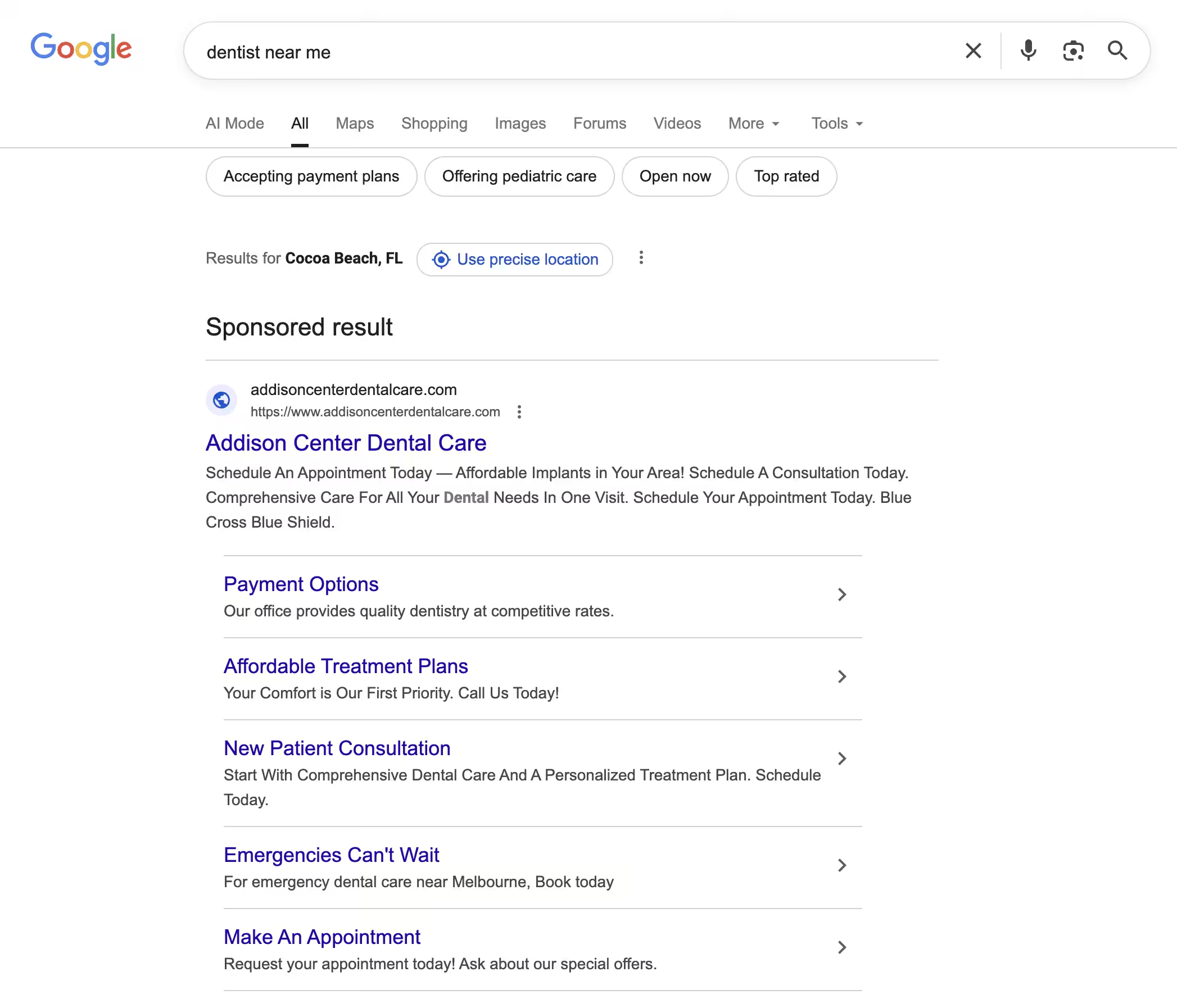
If you’ve never pulled out your phone and searched “dentist near me” from a patient’s perspective, you’re missing the full picture of how your practice appears online. Let’s walk through exactly what your patients see, section by section, from top to bottom.

Sponsored Ads: The Top of the Page

Sponsored results

The first thing a patient sees when searching for a dentist is a set of sponsored ads. These are paid placements, typically two to four of them, and they appear above everything else on the page.

Each ad shows a headline, a brief description, a phone number, and sometimes additional details like location or specific services. On mobile, many of these ads include a tap-to-call button, so a patient can go from searching to calling a practice with a single tap.

For dental practices, this is worth paying attention to. Google Ads give you a direct path to the top of the search results page while longer-term investments like SEO and reviews are building momentum. Unlike organic rankings, which take months of consistent work, ads can put your practice in front of high-intent patients within days of launching a campaign. When our paid search team sets up campaigns for dental practices, the focus is always on phone calls, not clicks. A patient searching “emergency dentist near me” or “dental implants in [city]” is ready to act. Ads connect that patient directly to your front desk.

That combination of speed and intent is what makes paid search valuable. It’s not a replacement for organic visibility. It’s a way to capture patients who are searching right now while your broader online presence grows.

The Map Pack: Where Many Patients Stop

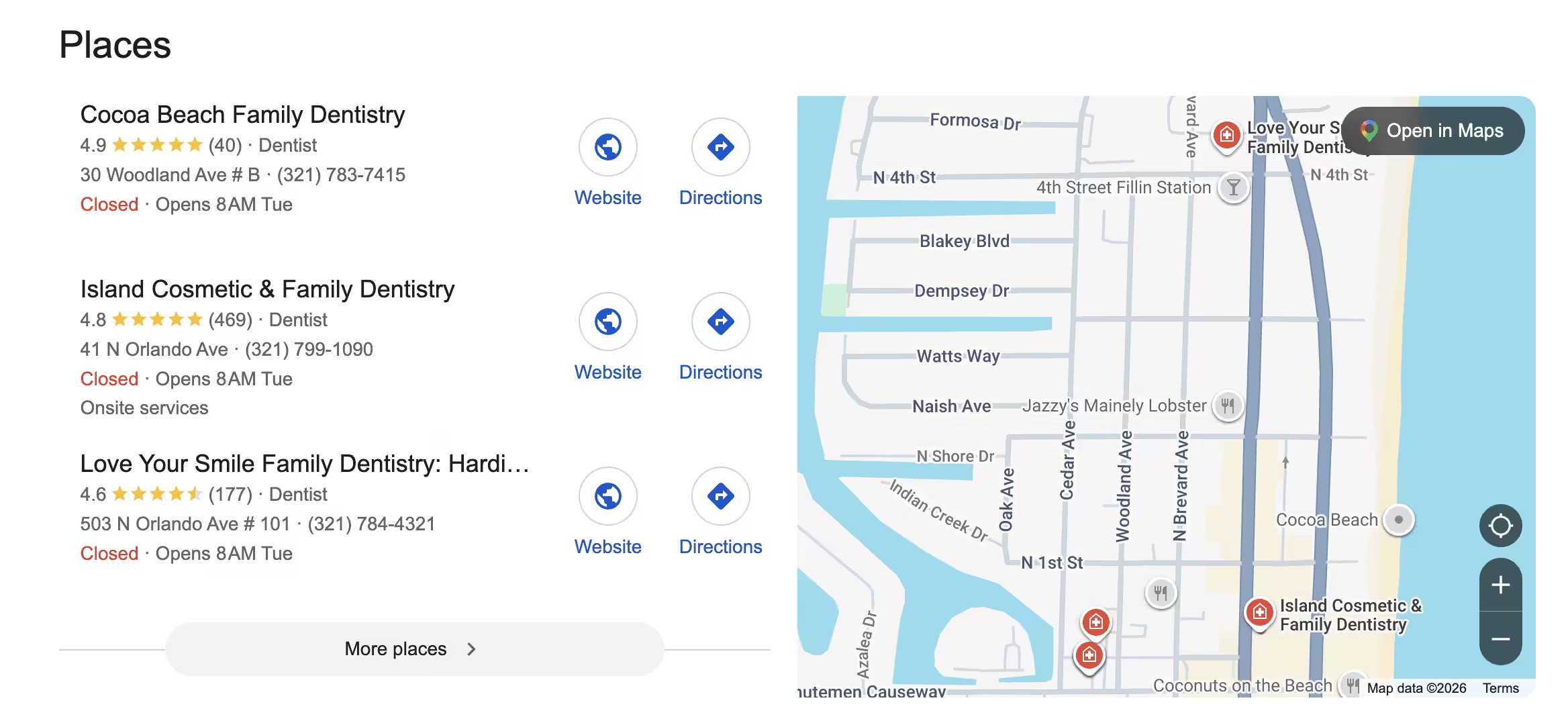
Map pack

Just below the ads, patients see the Map Pack: a set of three local business listings displayed alongside a map. This is Google’s local results section, and for dental searches, it’s one of the most important pieces of real estate on the page.

Each listing in the Map Pack shows your practice name, star rating, number of reviews, address, hours, and a link to your Google Business Profile. On mobile, patients can tap to call, get directions, or read reviews without scrolling any further.

Here’s what makes the Map Pack so significant: for many patients, this is the entire search experience. They see three practices, glance at the star ratings, maybe read one or two reviews, and make a call. They never scroll past this section.

After working with dental practices for over a decade, our team has consistently seen this pattern. The practices that appear in the Map Pack with strong review profiles and complete Google Business Profiles receive a disproportionate share of new patient calls. The practices that don’t appear here, or appear with incomplete information, are invisible to a large portion of patients who are actively searching.

What determines whether your practice shows up in the Map Pack? A few things: the accuracy and completeness of your Google Business Profile, the number and recency of your reviews, your proximity to the searcher, and the consistency of your practice information across the web. We’ll come back to that last point, because it matters more than most practice owners realize.

AI Overview: Google’s Summary Answer

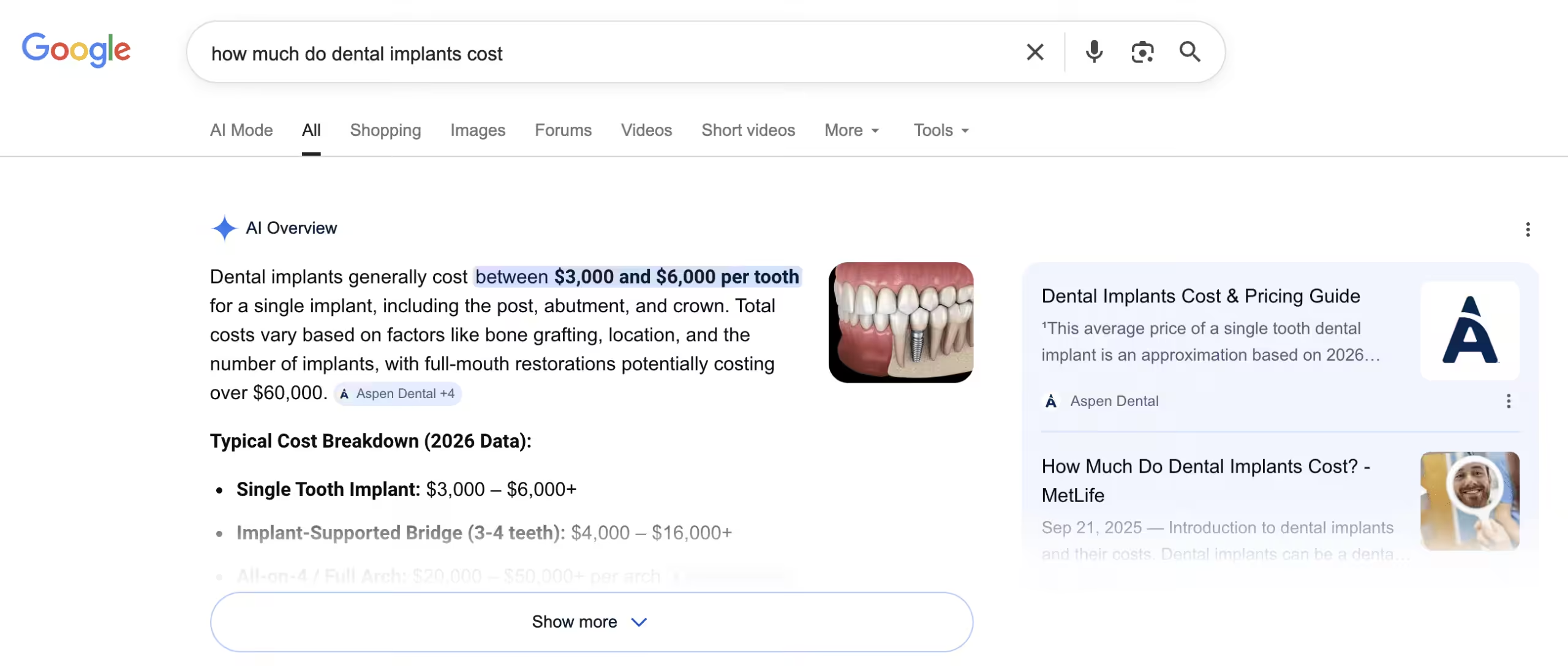
AI overview

When patients research specific procedures or dental topics, many searches now trigger an AI Overview at or near the top of the results page. This is a Google-generated summary that pulls information from across the web to answer the patient's question directly.

You're less likely to see an AI Overview for a simple "dentist near me" search. But for a question like "how much do dental implants cost," Google generates a summary that includes cost ranges, factors that affect pricing, and details about the procedure, drawing from dental practice websites, health publications, and review content. If your website has thorough, well-structured content about the services you offer, that content becomes source material for these AI-generated answers.

This represents a shift in how patients interact with search results. Instead of scanning a list and deciding which link to click, patients are reading a curated summary and forming impressions right there on the page. The practices with deep, detailed website content and recent, procedure-specific reviews are more likely to be referenced in these summaries. Practices with thin content and sparse reviews are unlikely to appear.

“People Also Ask”: The Questions Patients Have

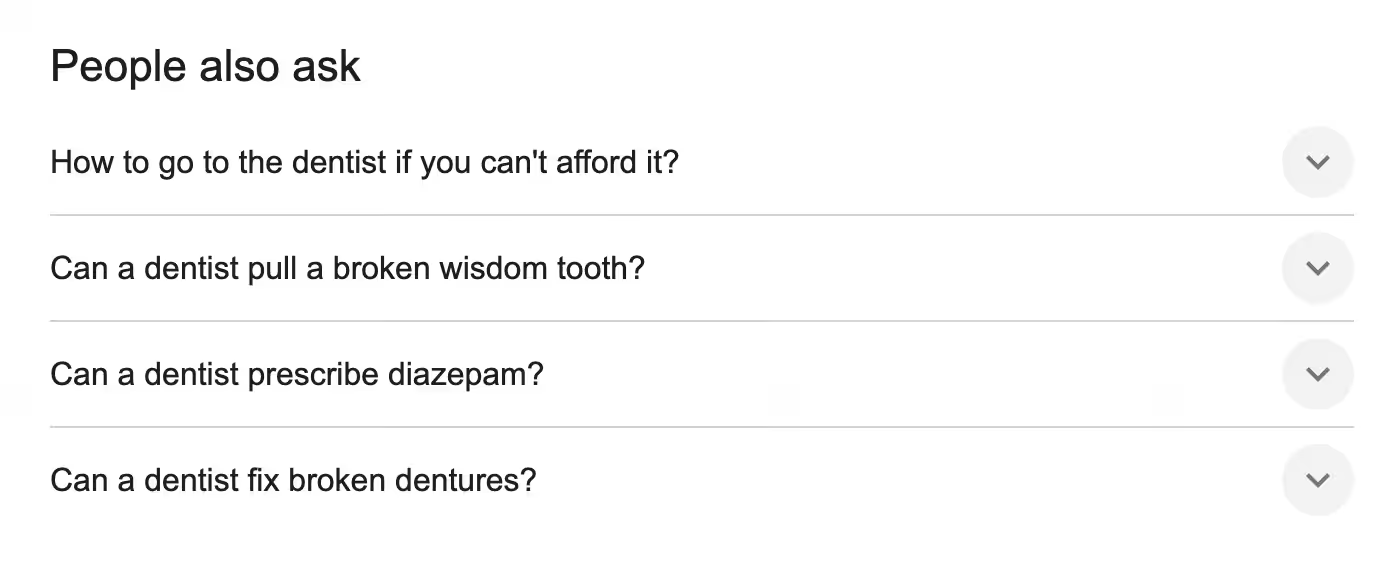
People also ask

Below the AI Overview, patients often see a “People Also Ask” section. These are expandable questions related to their original search. For dental searches, they might include:

  • “How much do dental implants cost?”
  • “What should I look for in a dentist?”
  • “How often should I go to the dentist?”

When a patient clicks on one of these questions, Google pulls an answer from a website that addresses the question clearly and directly. This is where content depth on your website pays off. Practices with comprehensive FAQ pages, detailed service pages, and educational blog content are more likely to be the source Google pulls from.

Think of it this way: you invest time educating patients in the consultation room because informed patients make better decisions. The same principle applies online. Thorough, patient-friendly content on your website doesn’t just help with SEO rankings. It positions your practice as the answer to the questions patients are already asking.

Organic Results: The Traditional Rankings

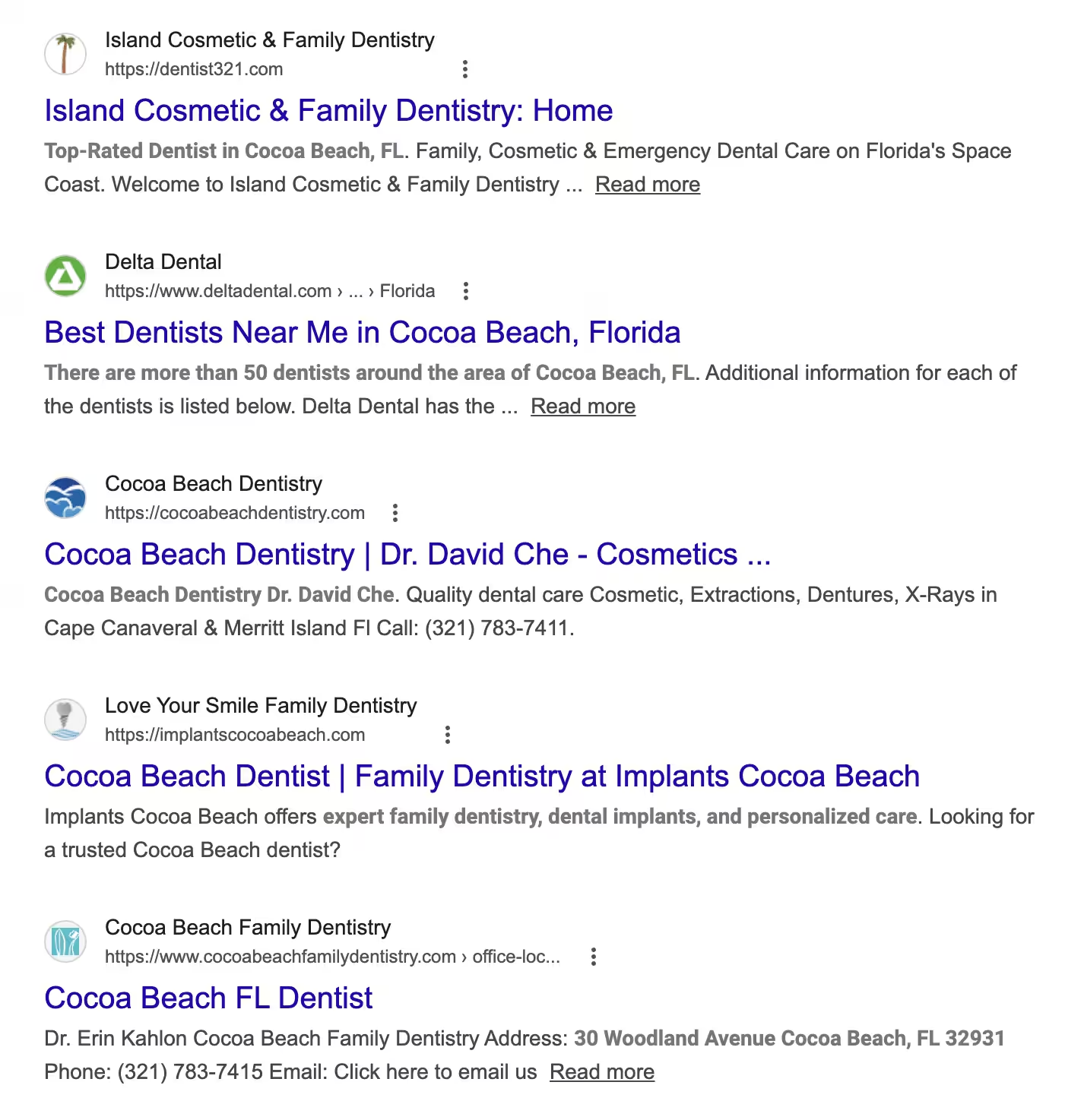
Traditional results

Below everything else, patients reach the organic results: the traditional list of website links ranked by SEO strength. These are the results most practice owners think of when they hear “getting found on Google.”

Organic results still matter. They’re the section where strong, sustained SEO investment shows up. But here’s the reality in 2026: organic results are often pushed below the fold on mobile devices. A patient has to scroll past ads, the Map Pack, an AI Overview, and People Also Ask questions before reaching the first organic link.

Organic results are one part of a much larger picture. When our SEO team works with dental practices, the goal isn’t just to rank well in organic results. The goal is to make the practice visible across multiple sections of the search results page, because patients interact with all of them.

The Zero-Click Reality

Here’s the pattern that ties all of this together, and it’s the most important takeaway for dental practice owners: more patients are making decisions without ever clicking through to a website.

They search "dentist near me." They see a practice in the Map Pack with a 4.8-star rating and 200+ reviews. They read a couple of those reviews, check the hours, and tap "Call." The whole process takes seconds, and it happens before they ever reach your homepage.

This is what the industry calls “zero-click search,” and it’s growing. Your website is still where patients go to confirm their decision, explore your services, and see your office. But it’s no longer the only place, or even the first place, where patients form an impression of your practice.

Your Google Business Profile, your reviews, your presence in AI summaries, the consistency of your information across directories: these are all shaping patient perception before your website even enters the picture.

When we audit a new client’s online visibility, we look at the full search results page, not just where the website ranks. We check whether the practice appears in the Map Pack. We look at review recency and volume. We check whether the practice data is consistent across Google, Apple Maps, Yelp, Healthgrades, and dozens of other directories. Because that’s what patients see. And what patients see is what drives their decision.

Your Search Results Page Is Your First Impression

The search results page is where patients form their first impression of your practice, and it’s made up of more than just your website. Your Google Business Profile, your reviews, your ad presence, your content depth, and your data consistency across the web all contribute to how a patient perceives your practice in the seconds before they decide to call or keep scrolling.

Want to see exactly how your practice appears when patients search? Request a complimentary visibility review and we’ll walk you through what your patients see, section by section.

You would never pick up a handpiece and start prepping a tooth without X-rays, a diagnosis, and a treatment plan. There’s an order to things. You assess what’s going on, prioritize what needs attention first, and then present the patient with a clear path forward.

Building a marketing plan for your dental practice works the same way. Yet many practice owners skip straight to the tactics. They start running Google Ads before their Google Business Profile is optimized. They invest in blog content before their website’s core service pages are in good shape. They add social media before the fundamentals are covered.

The result? Marketing spend that doesn’t deliver the way it should, and the frustrating feeling that “marketing doesn’t work.”

It does work. But like treatment planning, the sequence matters.

Step 1: Assess Where You Stand Today

Before you invest a dollar in any marketing channel, you need to understand where your practice stands right now. What does your online presence actually look like to a potential patient searching for a dentist in your area?

When a new client comes to us, the first thing our team does is a full audit of their online presence. We look at their website, their Google Business Profile, their reviews, their local search visibility, and the consistency of their practice information across the web. The diagnosis comes before the prescription.

Here’s what a marketing audit typically examines:

  • How your website looks and performs on mobile devices
  • Whether your Google Business Profile is fully optimized and accurate
  • How your practice information (name, address, phone number) appears across online directories
  • Your review volume, recency, and how you’re responding to reviews
  • How visible you are when patients in your area search for a dentist
  • Technical website issues that may be affecting your search rankings

Most dental practices we audit have at least two or three gaps they didn’t know existed. Once you can see them clearly, you know exactly where to focus first.

Step 2: Start with Local SEO as the Foundation

If you can only invest in one thing, start with Local SEO. Before on-page website optimization, before blogging, before running ads, you need your foundation in place.

Our Director of SEO puts it simply: Local SEO is the foundation. Your website is the house you build on top of it. Every practice we work with starts here, because nothing else works as well if this layer isn’t solid.

So what does “Local SEO foundation” actually mean in practice?

It starts with getting your primary profiles set up correctly. Your Google Business Profile, Yelp, Facebook, Apple Maps, and Bing Places listings need to be claimed, complete, and accurate. These are the platforms patients use most when searching for a dentist, and they’re the first places search engines look to understand your practice.

From there, you build out dozens of additional business listings across directories, healthcare sites, and data aggregators. The goal is to establish citations, which are consistent mentions of your practice name, address, and phone number across the web. Think of your NAP information as your practice’s digital DNA. When it matches everywhere, search engines and AI tools trust that your practice is legitimate, established, and located exactly where you say you are. When there are inconsistencies (an old phone number on one directory, a slightly different address on another), that trust erodes.

Here’s the dental analogy that makes this click: Local SEO is your periodontal foundation. You can place the most beautiful crown in the world, but without a healthy foundation underneath, it won’t hold. The same principle applies to your marketing. You can run the best ads and have the most impressive website, but if search engines aren’t confident about the basics of who you are, where you are, and what you do, nothing above that foundation performs the way it should.

Step 3: Build with On-Page SEO and Content

Once your local foundation is set, the next layer is your website itself.

This means optimizing your service pages so search engines clearly understand what you offer. Page titles, meta descriptions, header structure, and the actual content on each page all play a role. If you’re an implant dentist and your website has one short paragraph about implants, search engines don’t have much evidence that you’re an authority on that topic. Neither does a patient comparing your site to a competitor’s.

Content depth matters. A comprehensive implant page, supported by FAQs, aftercare information, and related blog posts, demonstrates expertise far better than a single thin page. In the age of AI search, this is even more important. AI tools are looking for depth and specificity when deciding which practices to recommend. The more thoroughly your website answers the questions patients actually ask, the more confident both search engines and AI tools become in pointing patients your way.

Image

This is where SEO starts compounding. Every piece of content you publish, every page you optimize, every blog post that earns a link from another site builds on the work that came before it. Think of it like preventive care for your online presence. Each visit builds on the last. Patients who keep up with their hygiene appointments have healthier outcomes over time. Practices that invest consistently in SEO build stronger visibility that competitors can’t easily replicate.

After working with hundreds of dental practices, the pattern is consistent: practices that invest in SEO early build a foundation that makes every other marketing channel more effective.

Step 4: Accelerate with Google Ads When You Need Patients Now

SEO compounds over time. But what about practices that need new patients calling this month?

That’s where Google Ads comes in. Paid search puts your practice at the top of results within days, delivering immediate visibility while your organic SEO builds strength in the background. The two channels complement each other well.

When our paid search team sets up Google Ads alongside an active SEO campaign, practices get the best of both worlds: immediate phone calls from ads while organic visibility grows month over month. Over time, as SEO gains traction, many practices find they can dial back ad spend in certain areas because their organic presence is carrying more of the weight.

One important note about measuring success with Google Ads: for dental practices, phone calls are the metric that matters, not clicks. A click on your ad doesn’t mean anything unless it turns into a phone call to your front desk. That’s why call tracking is essential. When our paid search team audits incoming Google Ads campaigns from new clients, the most frequent finding is the budget being spent on searches that will never become patients. Irrelevant search terms, broad match keywords running unchecked, and no call tracking in place are the most common fixable problems.

Putting the Plan Together

Just as you present a phased treatment plan to your patients (address the urgent need, then build toward ideal oral health), a dental marketing plan follows the same logic:

Phase 1: Foundation. Local SEO, citations, and primary profile optimization. Make sure search engines and AI tools trust the basics about your practice.

Phase 2: Build. On-page website optimization, content depth, and ongoing SEO. Establish authority and let visibility compound over time.

Phase 3: Accelerate. Google Ads layered on top to drive immediate new patient calls while organic visibility continues to grow.

Not every practice starts at Phase 1. Some come to us with a solid citation profile but a website that isn’t converting visitors into phone calls. Others have a great website but almost no local search visibility. The plan adapts to where you are right now, just like a treatment plan adapts to the patient sitting in your chair.

How to Know It’s Working

Marketing results take time, but you should see measurable progress from the start. And you should understand what your marketing team is doing and why.

You should be able to see new patient calls trending upward, search visibility improving for the terms that matter to your practice, and your Google Business Profile generating more engagement month over month.

A good marketing partner doesn’t just execute. They educate. You should never feel like marketing is a black box where money goes in and you hope patients come out. You should know what’s being done, how it connects to new patient growth, and what the plan is for next month.

The practices that invest steadily and stay consistent outperform those that chase quick fixes every time. Like preventive care, the payoff comes from showing up consistently, not from looking for shortcuts.

See Where Your Practice Stands

Want to know where your practice is today and what to focus on first? Request a Free Online Visibility Review. We’ll assess your visibility, identify the gaps, and show you exactly where to start.

Should You Add Background Music to Your Dental Website?

We're occasionally asked by our clients about adding background music to their dental websites. Years ago, this was a popular trend — it was fairly common practice for developers to add music to pediatric, orthodontic, and general dental websites as a way to add personality and atmosphere.

Times have changed. In those earlier days, multimedia elements were far less common than they are today. Now it's standard for a dental practice to feature patient education videos, welcome messages from the doctor, virtual office tours, and other audio-enabled content. Background music doesn't just feel dated — it actively conflicts with the rich video content most modern dental websites rely on to engage patients.

The User Experience Problem

Although mute controls can be added, there are no universal standards for where to place them. Even when they're logically positioned, visitors often struggle to find them quickly — and that frustration translates directly into bounce rate.

Consider this scenario: a patient has a dental emergency and needs to look up your contact information from work. They pull up your website, and music suddenly begins blaring from their computer speakers. That's not just embarrassing at their workplace — it looks unprofessional on your end. Their most likely reaction? Close the tab immediately and call a different practice. They probably won't come back later.

Mobile Users Expect Silence by Default

The shift to mobile has made background audio even more problematic. The majority of patient traffic to dental websites now comes from smartphones and tablets, and modern browsers on these devices intentionally block autoplay audio to protect users from exactly this kind of disruption. In most cases, your background music simply won't play at all — but the underlying audio file will still load, wasting bandwidth and slowing down your site.

Site speed matters. Slower pages hurt your dental SEO rankings and frustrate patients who expect information instantly. Every kilobyte of unused audio is working against you.

Your Patients Are Already Listening to Something

Many people listen to music, podcasts, or audiobooks through their computers and phones while browsing the web. When your website forces its own audio track into the mix, you're not adding ambiance — you're creating a collision that almost always ends with your site being closed.

Accessibility and Copyright Concerns

Autoplay audio creates serious ADA accessibility issues for users who rely on screen readers, which become impossible to hear when competing audio is playing. This is more than a courtesy — it's a compliance concern.

Copyright is another factor that limits your options significantly. You can't legally put the latest top 40 hit on your website unless it's specifically licensed for commercial use, which is typically either impossible or prohibitively expensive. That leaves you with a narrow selection of royalty-free tracks, most of which sound exactly like the generic "waiting room" music patients are already tired of.

What Works Better Today

Instead of background music, modern dental websites build engagement through:

  • Short welcome videos from the doctor or team — with user-controlled audio
  • Patient education videos that explain procedures clearly
  • Virtual office tours that help new patients feel comfortable before their first visit
  • Patient testimonial videos that build trust through real voices
  • Clean, fast-loading design optimized for every device

All of these give visitors something valuable when they choose to engage with it — not forced on them the moment they land on your homepage.

The Bottom Line

Background audio on dental websites is a trend that has passed. Unless you're starting a rock band instead of a dental practice, it's better to leave it off. We don't add background music to our clients' websites for all the reasons above. The hard truth is that someone is far more likely to leave your website because of unexpected music than to stay and enjoy it.

At Dentalfone, we help you engage with patients by focusing on thoughtful dental website design and optimizing your site for a full range of devices. If you'd like to talk through what's working on your current website — and what isn't — contact our team and we'll take a look.

Your dental practice logo is a foundational part of your brand identity and overall marketing strategy. It influences how patients perceive your practice and how easily they remember it.

Like any brand asset, however, a logo has a shelf life. It’s worth periodically evaluating whether yours still reflects who you are today.

Consider these factors to determine if your dental practice needs a new logo:

Your Logo is Outdated

It may be hard to believe, but an outdated logo can turn some people away from a brand, including a dental practice. Logos that have been in use for many years may begin to look outdated. What was trendy one or two decades ago may not be appealing today. Perhaps the font style or colors need to be changed to make it more aesthetically pleasing and current. Updating the design periodically can help ensure it continues to resonate with patients.

Your Logo Doesn’t Fit Your Brand or Rebrand

Your logo is your brand’s ambassador, often the introduction to your practice. If it’s not visually appealing and doesn’t represent your dental practice well, it should be redesigned.

Your logo should be one of, if not the first items to update if you are entering a rebrand. It will set the tone for the rest of your dental office’s rebranding strategy.

Your Practice is Changing

Maybe you aren’t officially rebranding, but you are adding new providers, opening a new or additional location, or providing a unique and innovative service. These practice changes may prompt you to consider updating your logo, even slightly, to signify that change and help spread the word.

The Font is Difficult to Read

Whoever designs your dental practice’s logo should follow established logo design principles. If they don’t, you may have a logo with a typeface that is difficult to decipher or color blocks in the wrong areas. If the design is so vague that multiple letters or words appear when viewing the logo, it may be worth considering a redesign.

Your logo should be designed with these principles in mind:

  • Originality: The design should be distinctive enough to attract attention and memorable enough to make a lasting impression.
  • Versatility: You’ll want to use your logo in many different places, including business cards and outdoor signage—you should ensure it looks good everywhere.
  • Scalability: Your logo should be scalable enough to represent your brand anywhere—from a billboard to a tiny pen.
  • Simplicity: The design should contain an excellent use of spacing and wise choices in typeface and color.
  • Balance & Proportion: The human eye sees balanced designs as beautiful. A well-proportioned design creates visual harmony among the elements of your logo.
  • Timelessness: Logos aren’t the place to experiment with design fads. Imagine explaining the thought process behind your logo over and over again for many years. The explanation likely won’t make sense five to ten years from now.

Your Colors May Not Reflect the Right Message

Color choice plays an important role in how patients perceive your practice. In healthcare and dental branding, color often communicates trust, cleanliness, professionalism, and comfort.

For example, certain colors commonly evoke the following impressions:

  • Blue is frequently used in healthcare branding because it conveys trust, professionalism, and reliability.
  • Green is associated with calmness, health, nature, and renewal, which can reinforce a sense of wellness.
  • Neutral tones such as white, gray, and soft earth tones often suggest cleanliness, simplicity, and modern design.
  • Accent colors can help highlight key elements of a brand, but they should be used carefully to maintain readability and contrast.

When evaluating your logo, consider whether the color palette reflects the tone and experience you want patients to associate with your practice. If the colors feel outdated, inconsistent with your brand, or difficult to reproduce clearly across digital and printed materials, it may be worth considering an update.


Do You Need Help Updating Your Dental Practice Logo? Contact Dentalfone Today

At Dentalfone, we specialize in marketing services for dental practices nationwide. Our designers have extensive experience working with dental practices and understand the unique considerations of the industry.

Our full suite of services can enhance your online presence and brand identity, including logo design. Our graphic designers will ensure that your new logo accurately reflects the type of dental practice you want your potential and current patients to experience.

Contact us online or by phone at 855-385-3663 today to schedule a consultation.

The way patients search for a dentist is changing — fast.

If your practice isn’t adapting, you may see reduced visibility in the places patients now turn for answers. The biggest shift? The rise of AI-driven search.

Platforms like ChatGPT and Google’s AI-powered search results are reshaping how people research providers, compare options, and choose a dentist. Patients are no longer just typing “dentist near me” into Google and scrolling through blue links. They’re asking conversational questions like:

  • “Who’s the best cosmetic dentist near me?”
  • “Is Invisalign worth it?”
  • “What dentist has great reviews for dental implants?”
  • “What dentist with great reviews that is open now is closest to me?”

AI platforms are increasingly providing concise, immediate answers within the search experience, frequently resolving a patient’s question before they ever click to visit a website.

This moment is similar to when smartphones changed everything in 2007. Practices that adapted to mobile-first marketing thrived. Those who didn’t struggled.

The use of AI-driven search tools is increasing.

In this article, we’ll outline what this shift means and provide a practical roadmap to help your practice adapt.

What’s Different About AI Search?

AI represents a meaningful shift in how patients discover and evaluate dental practices.

Instead of relying only on your website, AI platforms pull information from:

  • Online reviews
  • Google Business Profiles
  • Business directories
  • Social media posts
  • Website FAQ content
  • Third-party mentions

If your business listing information is inconsistent, outdated, or incomplete, AI systems may overlook your practice or display outdated information.

For dental practices, that can mean:

  • Fewer new patient inquiries
  • Reduced visibility for high-value services like implants or Invisalign
  • Losing ground to competitors whose online presence is clearer and more consistent

The Core Signals That Influence AI Visibility

Here’s where smart practices are concentrating their efforts:

1. Consistent, Accurate Data Everywhere

AI models rely on accurate and consistent information. Your practice name, address, phone number, hours, services, and provider information must match across all platforms.

Inconsistent data can limit how clearly your practice appears in search results.

2. Review Strength and Reputation Signals

AI search systems often rely on review content as part of how they interpret local businesses. The language (sentiment) patients use in reviews helps AI understand what you’re known for: cosmetic dentistry, sedation, implants, pediatric care, and more.

Reputation management has become a foundational part of digital visibility.

3. Clear Service Authority

AI tools answer specific questions. If your website and content clearly explain procedures, outcomes, FAQs, and patient concerns, you’re far more likely to be surfaced in AI responses.

Service pages that lack depth may be less likely to appear in AI-driven summaries.

Understanding these signals is the first step. The next question is how to act on them. Below is a practical framework dental practices can use to strengthen their visibility in AI-influenced search results.

A Practical Game Plan for AI-Era Visibility

1. Audit Your Business Data Consistency

Review your name, address, phone number, hours, and services across all major platforms. Resolve discrepancies and remove outdated listings. Your name, address, and phone number function as the core identifiers that connect your practice across digital platforms.

2. Strengthen and Monitor Review Content

Encourage patients to leave detailed reviews mentioning specific services. Monitor platforms regularly, try to reply within 24 hours, and respond thoughtfully.

3. Expand and Clarify Service Pages

Ensure each major service includes clear explanations, FAQs, and patient-focused language. Depth and clarity make it easier for search systems to understand your content.

4. Optimize Your Google Business Profile

Keep categories, services, photos, and business updates up to date. Your Google profile remains a primary visibility asset.

5. Maintain Cohesion Across Channels

Align messaging across your website, listings, social platforms, and review sites to create a consistent digital footprint.

How Dentalfone Helps Dentists Stay Ahead

Implementing this kind of framework requires coordination across multiple platforms. At Dentalfone, we help dental practices execute these priorities strategically and consistently.

Educating Practices About What’s Changing

Many dentists don’t realize how quickly search behavior is shifting. We help you understand what AI search means for your practice and how patients are discovering providers today.

Building an AI-Ready Digital Foundation

We help ensure your business data is consistent, optimized, and structured correctly across platforms. This includes:

  • Accurate listings management
  • Schema and structured data implementation
  • Optimized service content
  • AI review answering, reputation monitoring and improvement strategies

Strengthening Your Visibility Across Channels

AI search doesn’t pull from just one place. We help your practice build authority across:

  • Google search
  • AI-enhanced results
  • Social platforms
  • Review platforms
  • Local business directories

When your digital footprint is strong everywhere, AI systems have clearer signals to understand and reference your practice with greater confidence.

Acting as Your Strategic Partner

Beyond tactics, we help you interpret what these changes mean for your patient acquisition. Whether your focus is implants, full-arch cases, cosmetic dentistry, or hygiene production, we align your digital strategy with your business goals.

Now Is the Time to Act

Delaying updates may make it harder to adapt as search continues to evolve.

Just as mobile-first practices gained an edge over a decade ago, dentists who adapt early to AI search are likely to strengthen their long-term competitive position.

Patients are already using AI tools to research providers. The key question is whether your practice is positioned to appear in those answers.

At Dentalfone, we’re committed to helping dentists stay visible, trusted, and competitive — no matter how search evolves.

If you’d like to make sure your practice is AI-ready, call us at 855-385-3663 or contact us today. We’re here to help you navigate these changes confidently.

location
Dentalfone
3000 N Atlantic Ave., Suite 107
Cocoa Beach,
FL
32931
855-385-3663
HOURS
Monday
10am - 6pm EST
Tuesday
10am - 6pm EST
Wednesday
10am - 6pm EST
Thursday
10am - 6pm EST
Friday
10am - 5pm EST
Saturday
Closed
Sunday
Closed
SOCIAL
Accessibility