How FAQs Improve SEO & AI Visibility for Dentists
April 27, 2026

You’ve designed your dental office with intention. The lighting, the decor, the front desk experience. Every detail shapes how a patient feels the moment they walk in. But here’s a question most practice owners never think to ask: what does a patient see the moment they search for you online?
Not your website. Not yet. Before a patient ever visits your homepage, they see a search results page. And that page has changed dramatically in the last few years.
If you’ve never pulled out your phone and searched “dentist near me” from a patient’s perspective, you’re missing the full picture of how your practice appears online. Let’s walk through exactly what your patients see, section by section, from top to bottom.
Sponsored Ads: The Top of the Page
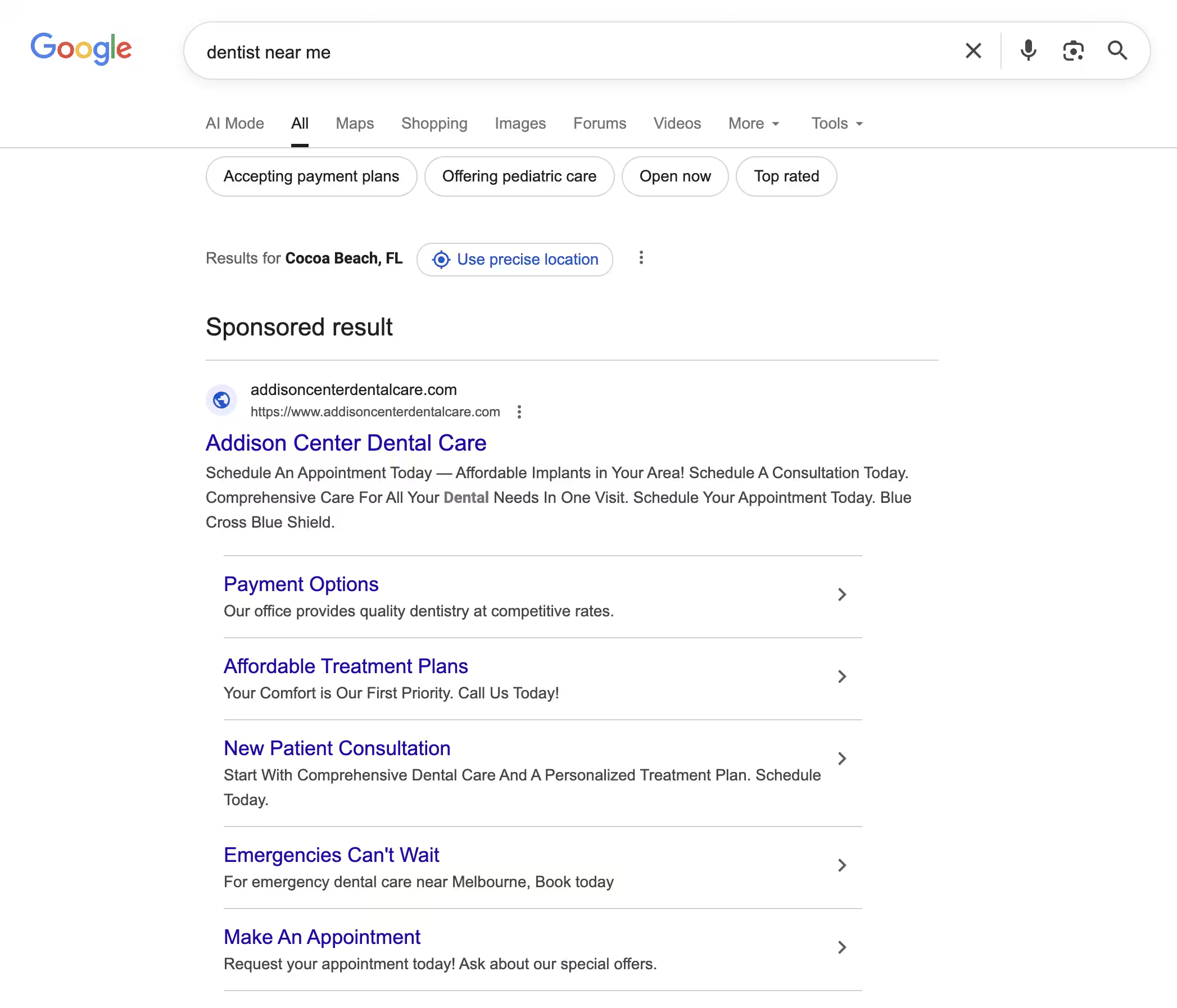
The first thing a patient sees when searching for a dentist is a set of sponsored ads. These are paid placements, typically two to four of them, and they appear above everything else on the page.
Each ad shows a headline, a brief description, a phone number, and sometimes additional details like location or specific services. On mobile, many of these ads include a tap-to-call button, so a patient can go from searching to calling a practice with a single tap.
For dental practices, this is worth paying attention to. Google Ads give you a direct path to the top of the search results page while longer-term investments like SEO and reviews are building momentum. Unlike organic rankings, which take months of consistent work, ads can put your practice in front of high-intent patients within days of launching a campaign. When our paid search team sets up campaigns for dental practices, the focus is always on phone calls, not clicks. A patient searching “emergency dentist near me” or “dental implants in [city]” is ready to act. Ads connect that patient directly to your front desk.
That combination of speed and intent is what makes paid search valuable. It’s not a replacement for organic visibility. It’s a way to capture patients who are searching right now while your broader online presence grows.
The Map Pack: Where Many Patients Stop
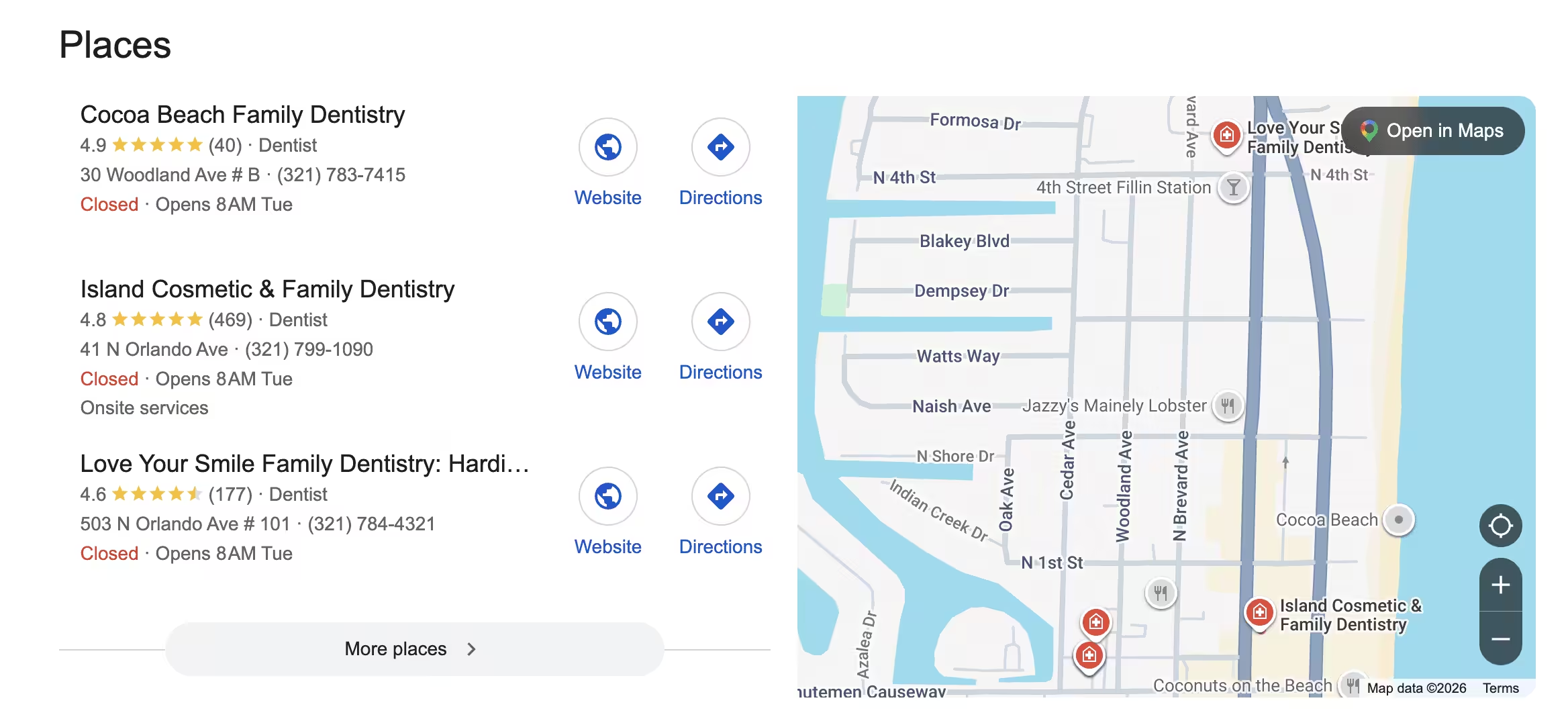
Just below the ads, patients see the Map Pack: a set of three local business listings displayed alongside a map. This is Google’s local results section, and for dental searches, it’s one of the most important pieces of real estate on the page.
Each listing in the Map Pack shows your practice name, star rating, number of reviews, address, hours, and a link to your Google Business Profile. On mobile, patients can tap to call, get directions, or read reviews without scrolling any further.
Here’s what makes the Map Pack so significant: for many patients, this is the entire search experience. They see three practices, glance at the star ratings, maybe read one or two reviews, and make a call. They never scroll past this section.
After working with dental practices for over a decade, our team has consistently seen this pattern. The practices that appear in the Map Pack with strong review profiles and complete Google Business Profiles receive a disproportionate share of new patient calls. The practices that don’t appear here, or appear with incomplete information, are invisible to a large portion of patients who are actively searching.
What determines whether your practice shows up in the Map Pack? A few things: the accuracy and completeness of your Google Business Profile, the number and recency of your reviews, your proximity to the searcher, and the consistency of your practice information across the web. We’ll come back to that last point, because it matters more than most practice owners realize.
AI Overview: Google’s Summary Answer
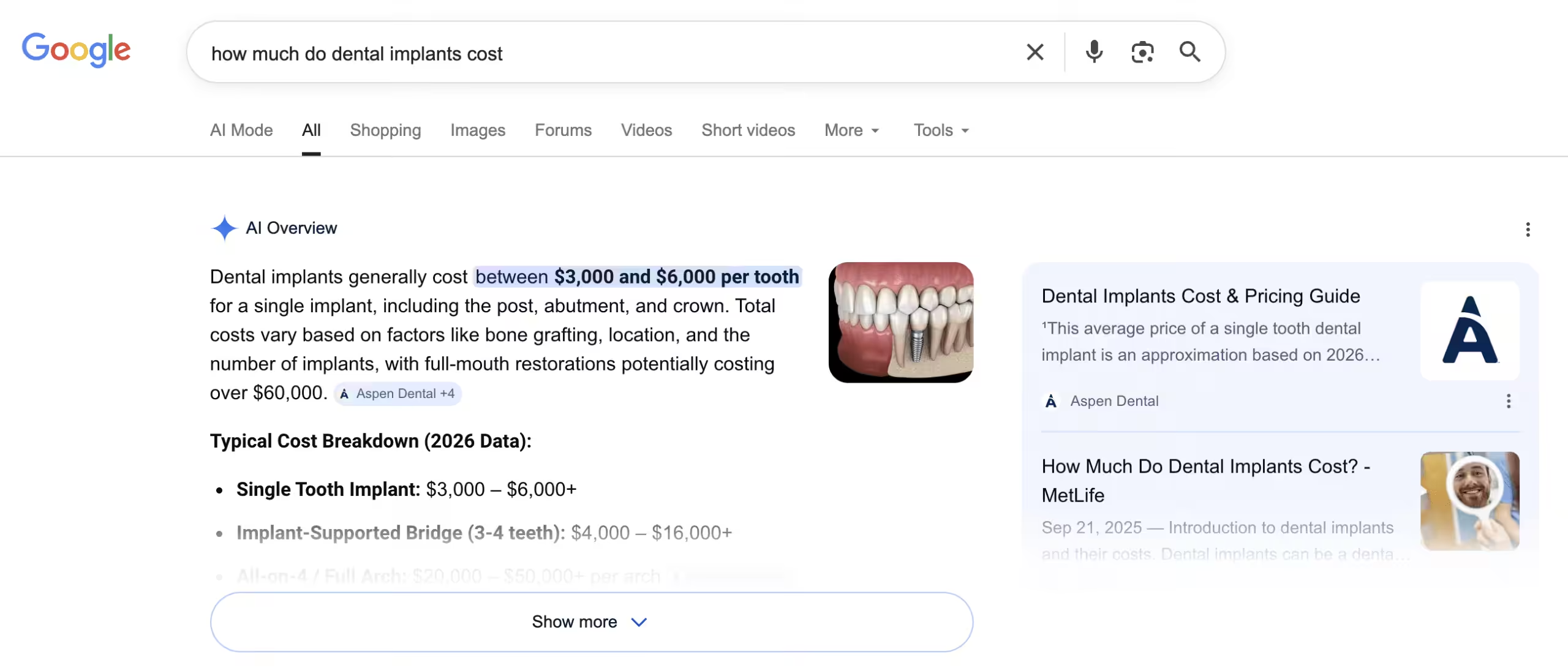
When patients research specific procedures or dental topics, many searches now trigger an AI Overview at or near the top of the results page. This is a Google-generated summary that pulls information from across the web to answer the patient's question directly.
You're less likely to see an AI Overview for a simple "dentist near me" search. But for a question like "how much do dental implants cost," Google generates a summary that includes cost ranges, factors that affect pricing, and details about the procedure, drawing from dental practice websites, health publications, and review content. If your website has thorough, well-structured content about the services you offer, that content becomes source material for these AI-generated answers.
This represents a shift in how patients interact with search results. Instead of scanning a list and deciding which link to click, patients are reading a curated summary and forming impressions right there on the page. The practices with deep, detailed website content and recent, procedure-specific reviews are more likely to be referenced in these summaries. Practices with thin content and sparse reviews are unlikely to appear.
“People Also Ask”: The Questions Patients Have
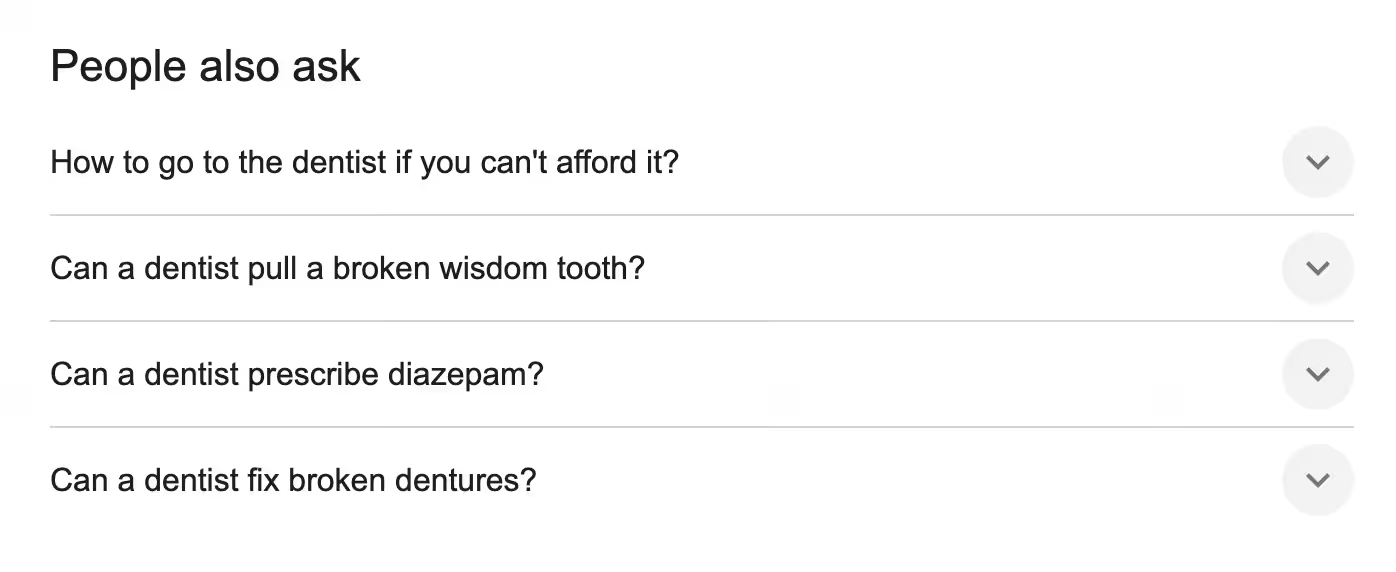
Below the AI Overview, patients often see a “People Also Ask” section. These are expandable questions related to their original search. For dental searches, they might include:
- “How much do dental implants cost?”
- “What should I look for in a dentist?”
- “How often should I go to the dentist?”
When a patient clicks on one of these questions, Google pulls an answer from a website that addresses the question clearly and directly. This is where content depth on your website pays off. Practices with comprehensive FAQ pages, detailed service pages, and educational blog content are more likely to be the source Google pulls from.
Think of it this way: you invest time educating patients in the consultation room because informed patients make better decisions. The same principle applies online. Thorough, patient-friendly content on your website doesn’t just help with SEO rankings. It positions your practice as the answer to the questions patients are already asking.
Organic Results: The Traditional Rankings
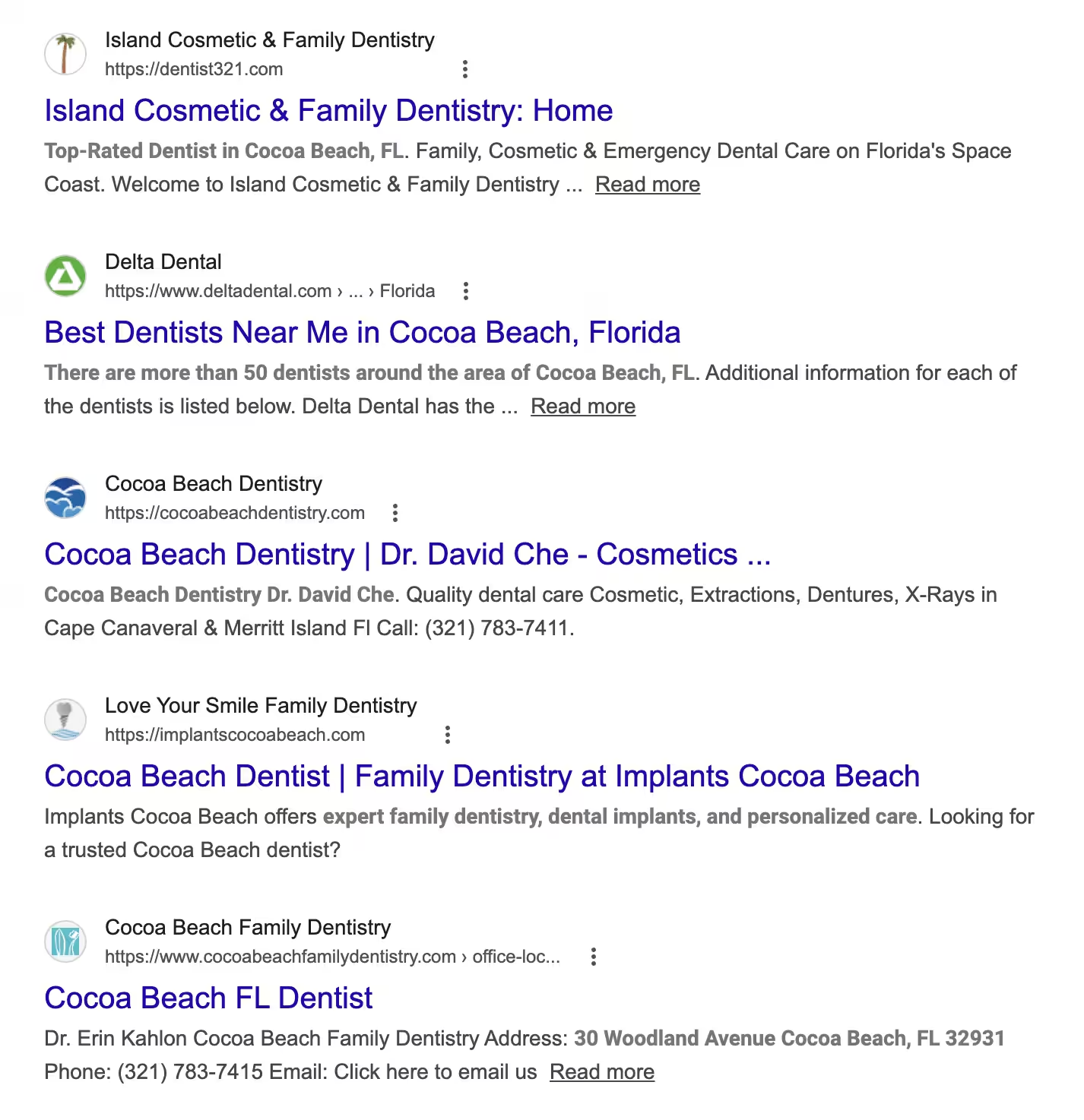
Below everything else, patients reach the organic results: the traditional list of website links ranked by SEO strength. These are the results most practice owners think of when they hear “getting found on Google.”
Organic results still matter. They’re the section where strong, sustained SEO investment shows up. But here’s the reality in 2026: organic results are often pushed below the fold on mobile devices. A patient has to scroll past ads, the Map Pack, an AI Overview, and People Also Ask questions before reaching the first organic link.
Organic results are one part of a much larger picture. When our SEO team works with dental practices, the goal isn’t just to rank well in organic results. The goal is to make the practice visible across multiple sections of the search results page, because patients interact with all of them.
The Zero-Click Reality
Here’s the pattern that ties all of this together, and it’s the most important takeaway for dental practice owners: more patients are making decisions without ever clicking through to a website.
They search "dentist near me." They see a practice in the Map Pack with a 4.8-star rating and 200+ reviews. They read a couple of those reviews, check the hours, and tap "Call." The whole process takes seconds, and it happens before they ever reach your homepage.
This is what the industry calls “zero-click search,” and it’s growing. Your website is still where patients go to confirm their decision, explore your services, and see your office. But it’s no longer the only place, or even the first place, where patients form an impression of your practice.
Your Google Business Profile, your reviews, your presence in AI summaries, the consistency of your information across directories: these are all shaping patient perception before your website even enters the picture.
When we audit a new client’s online visibility, we look at the full search results page, not just where the website ranks. We check whether the practice appears in the Map Pack. We look at review recency and volume. We check whether the practice data is consistent across Google, Apple Maps, Yelp, Healthgrades, and dozens of other directories. Because that’s what patients see. And what patients see is what drives their decision.
Your Search Results Page Is Your First Impression
The search results page is where patients form their first impression of your practice, and it’s made up of more than just your website. Your Google Business Profile, your reviews, your ad presence, your content depth, and your data consistency across the web all contribute to how a patient perceives your practice in the seconds before they decide to call or keep scrolling.
Want to see exactly how your practice appears when patients search? Request a complimentary visibility review and we’ll walk you through what your patients see, section by section.